
NCEFT National Center for Equine Facilitated Therapy


  • About
    • About NCEFT
    • Team
    • Horses
    • Board of Directors
    • Advisors
    • Client Stories
    • Testimonials
    • NCEFT Press
    • History
    • Partners
    • Education and Resources
    • Diversity, Equity, and Inclusion
    • Financials
  • Services
    • All Services
    • Spring and Summer Programs
    • Physical and Occupational Therapy
    • Mental Health and Resilience
    • Adaptive Riding and Horsemanship
    • Group Retreats and Facility Rental
    • Veteran and First Responder Programs
    • Special Education School Program
    • Happy Trails Camp
  • Give
    • Donate Now
    • All Ways to Give
    • Donate Stock
    • Donate Real Estate
    • Donate a Vehicle
    • Tack Donations
    • Donate a Horse
    • Double Your Donation
    • Volunteer
    • Planned Giving
  • Press
  • Sponsor a Horse
  • Tour our Center
  • Newsletter
  • Stay in Touch
  • APPLY FOR A PROGRAM

Therapy for Hippos

Therapy for Hippos

February 21, 2012 by Development Director

Blue Avocado, a nonprofit online magazine for community nonprofits, recently posted a column on things people say when they hear you work for a nonprofit.  There’s definitely a host of misconceptions regarding nonprofits and their differences from for profit companies.  This confusion is only compounded when you throw in foreign words like “hippotherapy” and attempt to convince someone that horses are absolutely a medical treatment and not simply something you see on a farm.  Hippotherapy is one of those things no one understands on the first go round.  Every explanation invariably ends with the listener offering a vacant smile or noncommital grunt of feigned comprehension.

So, what do we hear when we try to describe NCEFT?

“Is that physical therapy for horses, like if they’re hurt?”

What’s amazing about this comment is the acceptance of therapy as a tool for animals.  It wasn’t too long ago that admitting to using accupuncture on your horse meant widened eyes and sympathy for someone who had quite clearly lost their mind.  Now, chiropractors are as common as farriers and vets.  In fact, our therapy horses receive regular body work to keep them happy and healthy.

“You do therapy with hippos?” 

“Nope,  “hippo” is Greek for horse.”

Hippocrates, an ancient Greek physician, is often credited with first suggesting horseback riding as more than recreation, but instead a means of exercise.  It wasn’t until the 1960s that the term “hippotherapy” was coined to define the horse as an adjunct to physical therapy.  Considering this relatively recent timeline, its amazing to note that NCEFT will be celebrating its 41st year of offering equine-facilitated therapy.

“That must be depressing working with kids with disabilities.”

Anyone who’s ever stepped foot on our facility knows how far this is from the truth.  Imagine being a child who can’t walk without the help of canes, who has to labor over each step.  Now, how would it feel to be given the chance to sit astride a horse and ride without help.  To be present during a hippotherapy or an adaptive riding session is to know joy.  The only sadness or tears we see are from children unready to leave their ponies, or kids who want to take just one more lap on the ATV.

“Does that actually work?”

While we see countless improvements in objective, measurable areas like speech, balance, and strength, it’s the unmeasurable improvements that are most touching.  At its heart, therapy is about improving quality of life.  NCEFT offers patients and students the opportunity to spend a little time with beautiful animals in a stunning setting.  Consider what  Winston Churchill once said, “there’s something about the outside of a horse that is good for the inside of a man.”  When it comes down to it, there’s something about 880 Runnymede Road that’s good for the inside, the outside, and everything inbetween.

So, what’s the best line you’ve heard when explaining hippotherapy or equine-facilitated therapy?

Filed Under: Uncategorized Tagged With: Blue Avocado, equine, hippotherapy, horse, NCEFT, nonprofit, Runnymede

Heroes and Horsemanship: Day Three

February 10, 2012 by Development Director

Whether it’s carriage driving, competitive riding, or just a hobby, a life with horses is a social one.  Though it’s not clear if horseback riding attracts talkative people or instead creates them, the result is the same, a group of people intent on carrying on a conversation until days pass and seasons change.  Like twins separated at birth, we manage to find each other at crowded parties and expansive companies, and upon finding each other refuse to let go, madly quizzing each other on the price of hay, or the best winter blanket.  Ever noticed how our Horse Handlers say each equine’s name before issuing instructions (“Sebastian, walk on”)?  It’s to let the horse know the conversation is no longer aimed at the sidewalker, therapist, or patient, but at them.

For veterans returning from war, depression and anxiety can leave servicemen and women feeling isolated, starting a terrible cycle of social withdrawal.  We often talk about the physical benefits of equine-facilitated therapy, and even the mental benefits, but the emotional ones are just as important.  Our adaptive horsemanship program not only joins together veterans as peers, but brings into the conversation their significant others, children, and friends.  It creates and nutures relationships that are essential to their recovery.  Our arena is such a wonderful place to be, and within its walls are a group of people intent on helping each other become the best possible version of themselves.  We hope you too can feel that sense of friendship as you watch this week’s video, and be sure to stick around until the very end for what must be one of the most inspiring shots of a young veteran and his growing family.

Video: Heroes and Horsemanship: Day Three

Filed Under: Uncategorized, Veteran's Program: Adaptive Horsemanship Tagged With: adaptive horsemanship, equine, Heroes and Horses, hippotherapy, horse, NCEFT, TBI, therapeutic riding, traumatic brain injury, veteran, veterans

The Cost of Therapy

September 1, 2011 by Development Director

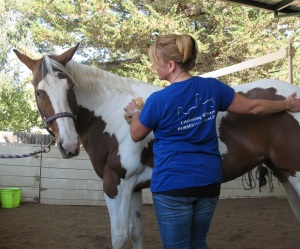
A NCEFT Horse Handler grooms Honey, a therapy horse in training, before tacking her up for some ground driving practice.

As I was dropping hundreds of invitations to this year’s “Jewels and Jeans Gala” into the mailbox at Roberts Market, I thought about the chasm between NCEFT’s need for fundraising, and the public’s understanding of the costs associated with our facility.  Our annual Gala raises roughly one-quarter of our year’s operating budget, funding horse care, patient scholarships, facility upkeep, and dozens of other areas of need.  Though income from our services offered (hippotherapy, therapeutic riding, etc.) helps fund NCEFT, without the continued support from generous donors, we’d be unable to help all of the children and adults who seek therapy at our facility.

Unlike most traditional therapy centers, NCEFT employs a specialized staff with around the clock needs.  These team members are at the facility 365 days a year, and accept food, board, and the occasional carrot, in exchange for their service.  The 14 therapy horses under our care are vital to the success of our program, and as such, receive the best upkeep we can offer.  However, employing a stable of horses comes at a cost, one that may surprise most.  Let’s take a peek into the daily routine of a therapy horse, and see just what goes into keeping our barn running.

7 am –   Horses get an individual portion of grass hay depending on their weight, height, and exercise level. 

8 am –   The Barn staff begin grooming and exercising horses set to work that day.  Each horse receives an hour of individual attention. 

9 am –   Barn stalls and upper stall-paddock combos are cleaned and rebedded with fresh shavings. 

10 am –  Therapy sessions begin.  Each session utilizes a horse handler, therapist, and as many as three volunteers.  Up to three or four sessions may run every half hour.

12 pm –   Horses get a specialized lunch with appropriate supplements and medications.  Our horses receive everything from supportive care for sensitivity to diet changes to apple-flavored electrolytes. 

5 pm –   Therapy sessions end for the day and horses get an evening meal similar to their morning feeding.

When combined, the cost of twice daily feeding, individual grooming and exercise, stall cleaning, specialized supplemental grain, and session staffing (horse handler and therapist), comes out to between $115 and $300 a session, depending on the type of therapy. 

Chase takes a moment for a photo op on Halloween

So, we ask for your help.  We ask that you consider giving to NCEFT in whatever way you can.  Whether small or large, your donations make a difference to patients and families who find hope and healing within our fences.  At $200, the purchase of a ticket to our Gala not only provides an evening filled with good food, great music, and fantastic company, but goes so far towards helping children like Chase.  Doctors predicted Chase would never walk or talk, but four years after starting therapy at NCEFT he’s doing both.

Filed Under: Uncategorized Tagged With: equine, Gala, hippotherapy, horse, NCEFT, therapeutic riding, woodside

TUF Stormy Weather

August 18, 2011 by Development Director

It’s impossible not to anthropomorphize when it comes to horses.  We can’t help but assign the emotions of joy and contentment when we watch some of our therapy horses in their sessions.  Where they sometimes fidget and mouth their handlers when they attempt to touch their faces, they move not a hair as patients unsteadily reach out small hands to pet muzzles or cheeks.

Stormy’s always happy to socialize with visitors

Stormy is as precocious a young horse as you’ll find, wise beyond his years and seemingly born to do therapy work.  With most Hippo and TR horses well into their teens, at only 6 years old Stormy is far from ordinary.  He belongs to our Barn Manager, Bonnie, who has generously been leasing him to NCEFT for the past year. 

In 2005 Bonnie was living in Visalia, CA, running Sunny Days, a private carriage service.  While searching for a pair of white horses to use for formal events, Bonnie fell in love with Fjords and began looking for a matched set of grey duns.  After seeing a photo of Stormy online, at the time only a month old, she fell in love.  A couple months later Stormy stepped off the trailer from Michigan, a gift from Bonnie’s father.  Over the next year Stormy was more dog than horse, going for long walks with Bonnie and her kids around their neighborhood and in downtown Exeter.  By age two he was being ground driven, by three he was between the shafts of a light cart, and by four he was attending schooling shows. 

Stormy and one of his Hippotherapy patients

A year later, Bonnie loaded up her three horses (by then adding a second Fjord to her small herd) and moved up to Los Gatos.  Believing their strong driving background made them ideally suited to therapy work, she began looking for a facility interested in using the horses.  Three months went by before Bonnie found NCEFT, and it wasn’t long before they were participating in sessions. 

Stormy is now following in his Uncle Sebastian’s footsteps, well on his way to becoming an invaluable member of the NCEFT team.  A regular participant in hippotherapy, vaulting, therapeutic driving, and soon therapeutic riding, Stormy is the definition of  versatile.  Though care is being taken to make sure our star player doesn’t get burned out, his positive attitude and laissez faire outlook lead us to believe he’ll be a happy member of the program for many years to come.

Filed Under: Our Horses Tagged With: equine, Fjord, hippotherapy, horse, NCEFT, Norwegian, Therapeutic Driving, therapeutic riding, Vaulting, woodside

Willy and Wonka

July 25, 2011 by Development Director

They’re the quintessential socialites. Whether it’s white tie or country chic, the two of them have been photographed at every social event since their arrival in Woodside four years ago. You won’t find them knocking back a cocktail though; at only 5 years old they’re both too young to partake in anything more than a bucket of water.

2010 Jeans and Jewels Gala

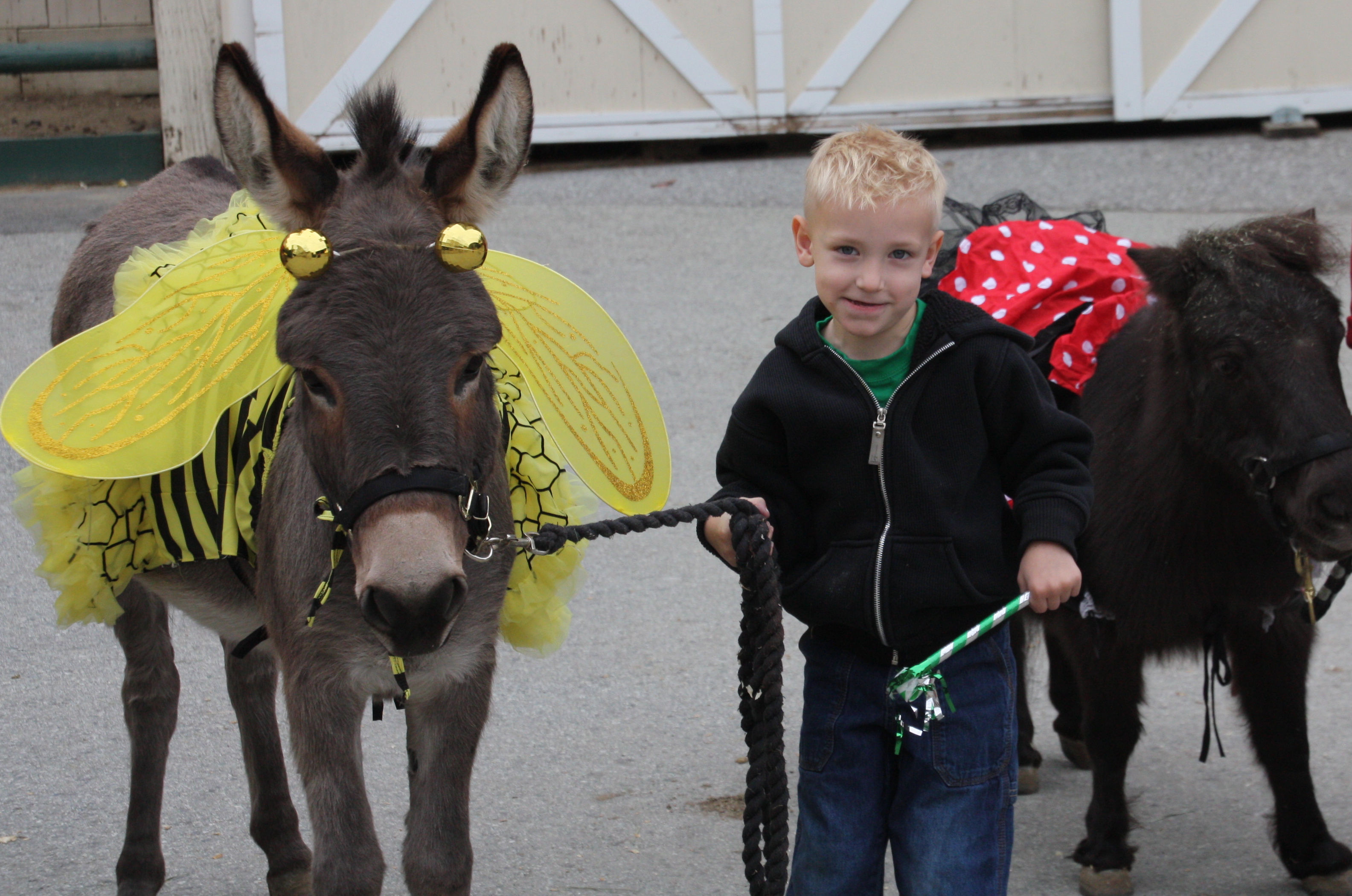
Willy and Wonka are arguably some of the most prominent and well-recognized members of NCEFT. Though some of their notoriety is certainly due to a serious set of vocal chords—often put to good use during feeding time—their fans love them for more than their good looks. Officially known as Miniature Mediterranean Donkeys, the boys are the perfect size for our smaller patients to love on. Though their list of marketable skills is short (walks on lead, eats cookies), they earn their keep as ambassadors, entertaining visitors with antics and elaborate costumes alike.

Oscar as a foal at Evening Star
 Registered as Evening Star Chris and Evening Star Oscar’s Doc Holiday, both Donkeys were born in 2006 at Evening Star Ranch in Raymond, CA.  It’s hard enough for most people to tell Willy and Wonka apart, much less try and match them to registration papers written back when the donkeys were yearlings, so for now we don’t know who’s Chris and who’s Oscar.  In any case, the two of them arrived at NCEFT in late 2007 and instantly settled into their roles as icons. 
Willy and Wonka at the 2011 Poker Walk

It’s been 4 years and the boys’ fan base is still growing.  During lunchtime you’ll find them roughhousing in the arena with our Miniature horse, Roxy, or taking a walk with one of the many volunteers who helps care for the “Three Amigos.”  They’re always happy to visit with admirers, so be sure to say hello the next time you’re at the barn.

Filed Under: Our Horses Tagged With: donkey, equine, hippotherapy, horse, miniature, mule, NCEFT, therapy, woodside

  • « Previous Page
  • 1
  • …
  • 3
  • 4
  • 5
  • 6
  • 7
  • Next Page »

NCEFT: HORSES. HOPE. HEALING.

Horses. Hope. Healing. Three simple words that, when combined, have the power to transform lives. NCEFT is centered around helping people. We are about compassion, inclusiveness, and offering the highest level of service to those in need. We do this by harnessing the unique connection between horses and humans. NCEFT is also about community. Many of our clients and families describe NCEFT as a place that feels like home with people who feel like family.


Sign up for our Newsletter

NCEFT
880 Runnymede Road
Woodside, CA 94062-4132

P: (650) 851-2271
F: (650) 851-3480
E: info@nceft.org

Contact Us
Hours of Operation
Visitor Forms

One Time Donation
Monthly Donation
More Ways to Give
Volunteer
Careers
FAQ
Privacy Policy


© 2022-2025 The National Center for Equine Facilitated Therapy. NCEFT is a non-profit 501(c)(3) public benefit corporation established in 1971. Tax ID# 94-2378104.